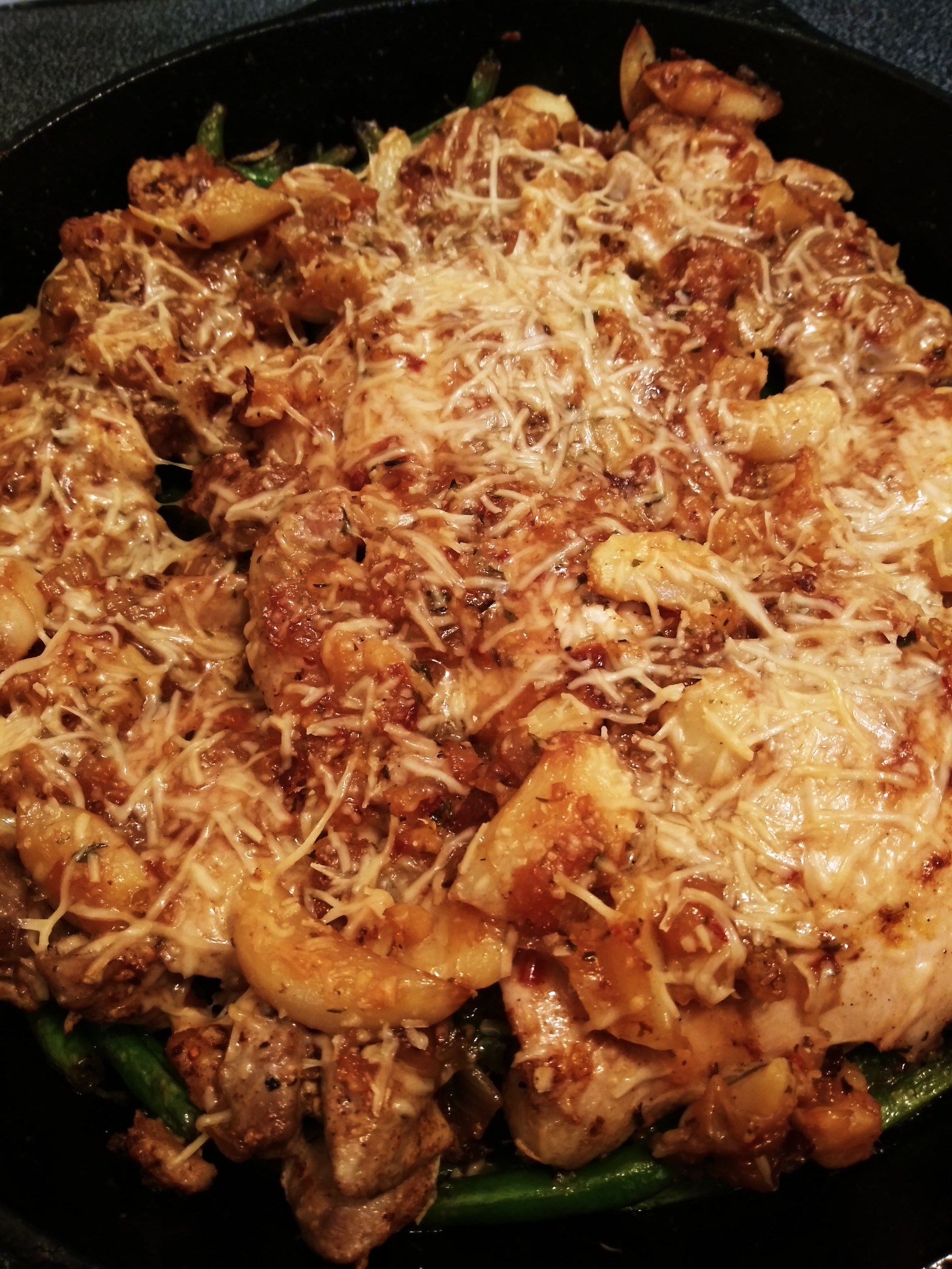
Are you one of those people that think that when a recipe says 2 or 3 cloves of garlic, you contemplate 20 or 30? I think you’ll like this. This involves sauteing fresh garlic cloves until they’re browned, softened, and sweet. Yes, cooking these down makes them soft and sweet, so eating whole cloves of garlic don’t feel as pungent and you don’t feel quite so bad for smelling like garlic for a day or two. Quite.
If you look elsewhere on the internet, you might find this labelled “20 clove” or “40 clove” like that restaurant in L.A., but I honestly believe garlic is not something you measure nor you count. Just start breaking apart bulbs of it and when you’ve had enough of peeling fresh cloves, you might be at a good amount. For this, I used almost three full bulbs, but because it was so fresh and not fully dried, we had a hard time peeling everything and left a couple of cloves for later use. It was probably in excess of 20 cloves altogether, but I didn’t actually count.
This stems from an old French recipe, and when I say this, expect to use a fair amount of both wine and butter. Now, if you don’t want to use wine or regular cooking wine you’ll find in the vinegar section of the supermarket, it’s okay. It’s not mandatory to use, but it just adds flavor. The key part of using wine, or cooking wine which is with added salt and reduced alcohol content so it’s available for general use, is to add it to a searing hot pan and let it “deglaze” the pan. This is a fancy word for wetting the super hot pan and getting things to stop sticking to it. The idea is to let most of the liquid and alcohol boil off, leaving just the flavor of the wine, which makes this perfectly safe to have for anyone who is avoiding alcohol. People have done the math elsewhere on the internet, but the idea is to boil it for several minutes to burn off the alcohol content.
Ingredients:
Fresh Garlic
Butter
White wine (or white cooking wine), 12oz minimum
Onion, diced, half
Thyme
Salt
Pepper
Crushed red pepper
Low-Heat Oil (like olive)
Chicken (cut of choice, I used boneless chicken thighs)
Parmesan cheese
Parsley
Cornstarch (optional)
Concept: Saute onions and garlic cloves, then remove and heat pan as hot as comfortable, then sear the chicken quickly, without worrying about fully cooking. Use wine deglaze pan and reduce. Turn heat off, and add back in onions, garlic, and spices. Put chicken back into pan, sprinkle with parmesan cheese, and bake at 350 until chicken is cooked through.
Dice the half an onion into 1/4″ pieces, or finer if you wish, and put into a pan on low heat with a low-heat oil, like olive oil. Peel as much garlic as you can, but it might prove easier to use the flat side (broad side) of a knife to help put pressure onto a clove to break it just enough to peel it. Use plenty of salt to help draw out moisture and the natural sugars of the onion and garlic in the pan, and let it cook, tossing in the pan on occasion. Keep the pan wet with oil and add butter as things begin to brown. Feel free to reference Caramelizing Onions for more tips on getting this done.
Take the onions and garlic out of the pan once they’re sweet and buttery, and put them into a dish off to the side. We just want to get them out of the way so they don’t burn in this next step. Crank the heat up on the pan as high as your stove allows (or as high as you allow your stove to go if you, like me in the past, have had a smoke alarm almost directly above your cooking area) and allow it to start to smoke. Add some extra oil and butter in the pan to help prevent sticking, and sear the chicken on both sides. It’s okay to not fully cook the chicken in this step, we’re just getting the process started and we will finish this in the oven. Once all the chicken has been seared and the pan is quite possibly sticky, remove the chicken from the pan and add the wine. The wine will deglaze the pan, or in layman’s terms, remove some of the stickiness and anything stuck to it. Let the wine boil down and reduce, then turn off the heat and add back in the onions and garlic. Add pepper, a little bit more salt, crushed red pepper, and thyme to the mix, letting the spices cook into the sauce. If you find that the sauce feels too thick, add more butter. If the sauce feels too thin, make a roux with cornstarch. During this process of making the sauce, take a moment to preheat your oven to 350.
Once the sauce feels and tastes secure, add the chicken back in and stir it into the sauce. Feel free to coat it, so that the chicken is fully submerged in juices that’ll keep it delicious and flavorful during the time in the oven. Top the chicken with some parmesan cheese, I personally use shredded over grated for this, and put into the oven for about 10-15 minutes, depending on what cut of chicken you are using. Thighs don’t take as long to cook as breasts due to typically thinner cuts of meat, particularly if you use boneless and skinless thighs.
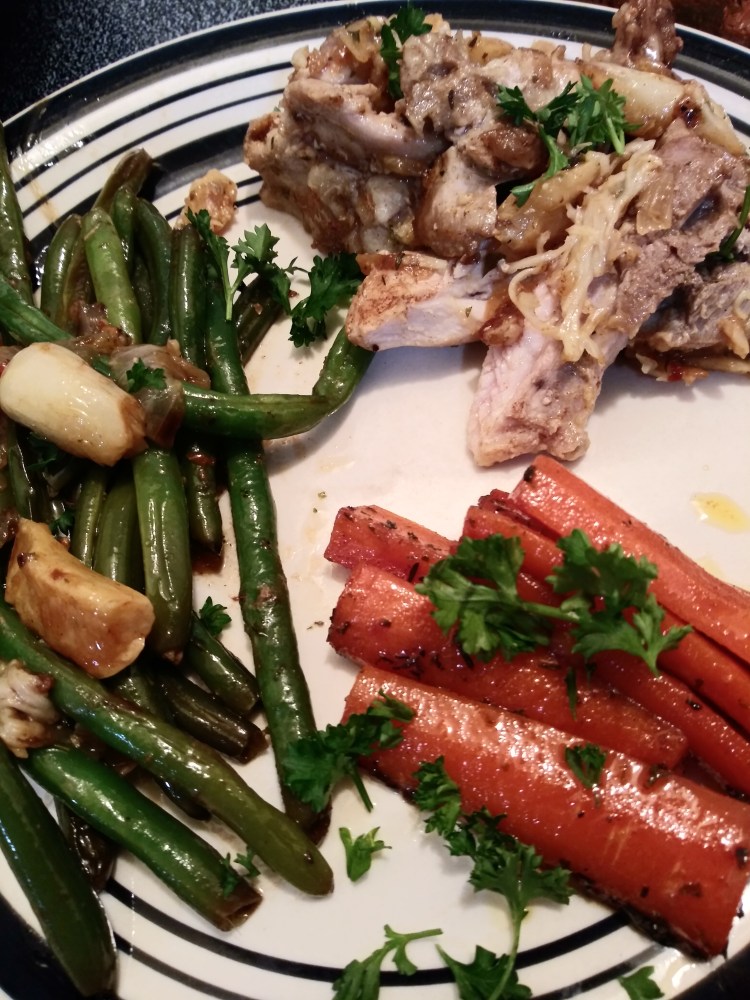
I make this with a side of green beans, which goes great with the garlic sauce. Top with parsley to serve.
 The Family Cookbook